
You want a bit of extra money. The hard part is finding a way that is real, free, and actually worth your time.
Search for one and every list looks the same. Dozens of ideas, half needing cash upfront, a few barely legit, and no hint which ones really pay.
This guide skips the padding.
It sticks to the ways to make money online in the UK that are genuinely free and actually pay, with honest numbers for each one. Some take real work. A couple take none at all.
You will know exactly which is which before you start.
How to spot a legitimate way (and avoid the scams)
Before the methods, learn to tell the real ones from the rest. This is what separates a genuine way to make money online from a trap.
The pattern is simple. Real methods pay small and tell you the truth. Scams promise big and hide how the money works.
- It is free to join. A genuine method never charges a fee to start earning. If you have to pay before you can make any money, walk away.
- The numbers are honest. Real methods promise small, modest pay. Anything promising £500 a day or a full salary for no work is not telling the truth.
- You get paid in real cash, with a clear minimum. Look for real money to PayPal or your bank, with a stated payout minimum, not points that never cash out.
- A real company runs it. You should be able to find a named company behind the method. No company name anywhere is a red flag.
- You earn from the work, not from recruiting. If the main way to make money is signing up other people, or paying to "unlock" higher earnings, it is a pyramid scheme, not a real job.
- It does not ask for risky details upfront. A legit method never needs your bank password, a copy of your ID, or an upfront payment for "training" before you can start.
One quick habit before you start
Before you start anything, search its name together with the word "review" or "scam" and read what real users say. It takes two minutes and saves hours of wasted effort.
Genuine ways to make money online in the UK
To make them easier to compare, we have grouped them by how they work: passive apps, online tasks and gigs, creative work, selling, and teaching. Most are free to start; a couple need a skill or a little money first, and we flag those clearly.
Passive and low-effort apps
These run on your phone in the background or with a few quick taps. Pay is small, but so is the effort.
1. Passive background apps
These apps earn while you do nothing. You install one, leave it running, and the money builds up on its own.
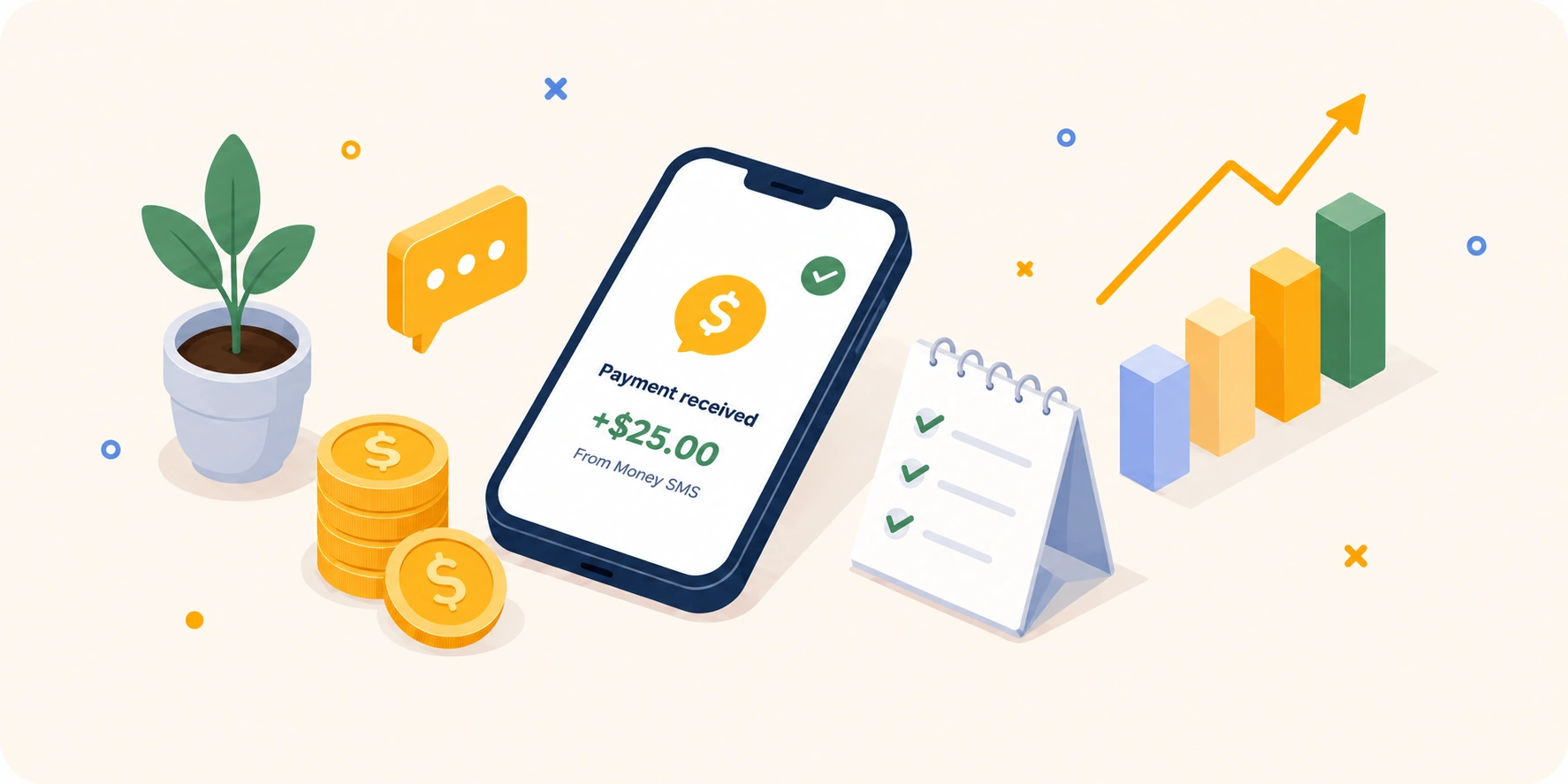
The Money SMS app, on Android, runs quietly in the background. There are no tasks to do and nothing to tap after you install it. It lets you earn money by receiving SMS. Other passive apps work the same hands-off way, quietly sharing a small slice of your spare internet data, which companies use for market research and price checks.
They pay less than active methods, but the effort is close to zero, which is the whole point. If you want a closer look at how apps let you make money from your phone, we cover it in a separate guide.
2. Cashback and reward apps
These pay you small amounts for things you already do, or for a few minutes of light tapping.
Cashback sites like TopCashback and Quidco pay you back a slice of what you spend when you shop online through them, money you would spend anyway. Reward apps pay small sums for short surveys and simple offers. Both are free and both pay real cash, but the amounts stay small unless you shop a lot or put in the time.
3. Watching ads and paid offers
Some sites pay you a small amount to watch short video ads, complete simple offers, or play games. These are often called "get-paid-to" (GPT) sites.
Sites like Swagbucks and InboxPounds give you points for watching ad clips and trying offers, which you swap for PayPal cash or gift cards. The pay per ad is tiny, so this works best in spare moments, not as a main earner.
Online tasks and gigs
These pay more per hour than the apps above, but you have to show up and do the work. You pick up tasks when it suits you.
4. AI training and data tasks
AI models are trained by people, and that work is now a steady online earner.
Sites like Prolific, Appen, and Outlier pay you to label data, rate AI answers, check images, or record short voice clips. The tasks are simple and need no special skill, just care and a steady internet connection. You pick up work when it is available and get paid per task or per hour.
Pay is better than surveys when work is flowing, but it comes and goes, so it is not something you can count on every day.
5. Website and app testing
Companies pay real people to try their websites and apps before launch.
On sites like UserTesting, Userlytics, and Testbirds, you complete a short task while talking through what you see, or report bugs you find. A typical test takes 10 to 20 minutes and pays a few pounds. You need a microphone and clear spoken English, but no technical skill.
The pay per test is good, but tests are limited, so treat it as a top-up rather than a reliable wage.
6. Virtual assistant work
Businesses pay virtual assistants to handle everyday admin from home, such as email, scheduling, data entry, and customer replies.
You find clients on sites like PeoplePerHour or Time Etc, then work set hours or per task. You need to be organised and reliable, but no special training. Pay is steady once you have a regular client, though it takes time to build that up.
7. Translation and language gigs
If you speak two languages well, you can get paid to translate text between them.
Sites like Gengo and Unbabel pay you per word to turn short documents, emails, or subtitles into another language, and you pick up jobs when they suit you. The work is reliable if you are fluent, but you do need real skill in both languages, so it is not for everyone.
8. Bank switching and sign-up bonuses
UK banks pay cash bonuses to win new customers, and you can claim them legitimately.
Switch your current account through the official Current Account Switch Service and a bank will often pay you £100 to £200 to move across. Some savings apps and investment apps add smaller welcome bonuses too. It is real money for an hour of admin, but each offer is one-off, so it does not repeat.
Always read the terms, as most bonuses need you to pay in a set amount or move two direct debits first.
Creative work
If you can make things, you can earn from them. This covers video, writing, design, photos, and art, from quick paid clips to a channel or shop that keeps paying for years.
Legitimate ways to make money online
This one needs no time at all. Leave it running and Money SMS turns the test SMS your phone gets into real cash — €2 to cash out.
9. Short videos and content for brands
Brands pay everyday people for short, honest videos about their products. This is known as UGC, or user-generated content.
You film a quick clip on your phone, often just unboxing or using something, and the brand uses it in their ads. Platforms like Billo and Trend connect creators with brands, and you do not need a big following, just a phone and natural delivery. A single video can pay £20 to £100.
It takes effort and a little confidence on camera, but the pay per video is among the best on this list.
10. Content creation (YouTube, blog, TikTok)
Build an audience with videos, posts, or articles, then earn from ads, sponsors, and affiliate links.
A YouTube channel, blog, or TikTok account is free to start and can pay for years once it takes off. The catch is time: it usually takes months of steady posting before any money arrives, and most people give up before then. Pick a topic you can keep creating about, and treat the early months as unpaid practice.
11. Selling designs, photos, and art
If you can design, draw, or take good photos, you can sell that work online again and again.
Upload designs to a print-on-demand site like Redbubble, where they are printed on t-shirts and mugs only when someone buys, so you hold no stock. Or sell photos to stock libraries like Shutterstock and Adobe Stock, where the same image can earn for years. The pay per item is small, but a good back catalogue keeps selling on its own.
Selling online
Turn things into cash: sell what you already own, flip bargains for a profit, or build a digital product once and sell it again and again. Most are free to start; one (dropshipping) needs money upfront.
12. Selling digital downloads
Make something once, then sell it again and again with no extra work.
Digital downloads are files people buy and download instantly: budget spreadsheets, planners, social media templates, printable wall art, or e-books. You list them on Etsy, Gumroad, or Payhip, and the same file can sell to hundreds of buyers. After the upfront build, sales come in on their own.
It is not free of effort, as making something worth buying takes real time, but once it sells it leans toward passive.
13. Flipping and second-hand selling
Sell things you no longer need, or buy items cheaply and pass them on for more.
Second-hand selling is the easy version: list clothes, gadgets, or furniture you already own on Vinted, eBay, or Facebook Marketplace and clear out for cash. Flipping goes a step further: you hunt for bargains at car boot sales, charity shops, or clearance deals, then resell them at a profit. Both are free to start, though flipping takes time to learn what sells.
14. Dropshipping
Sell products online without holding any stock, with a supplier shipping each order directly to the buyer.
It can grow into a real business, but it is not free and not easy. You need an ad budget upfront, and most stores lose money before they find a product that sells. Treat it as starting a business, not a quick side earner, and only with money you can afford to risk.
Teaching online
Know a subject well? Get paid to pass it on, either recorded once or taught live.
15. Selling an online course
If you know a subject well, you can teach it once and sell it many times.
Record a course on something you understand, from spreadsheets to guitar, and list it on a platform like Udemy or Teachable. Building it takes real time and effort, but after that, sales come in without you. Like digital downloads, it leans passive once it is live, though it pays nothing until people buy.
16. Online tutoring
Teach a subject or a language live, one student at a time.
Platforms like Preply and MyTutor connect you with learners and handle the booking and payments. It is reliable and well paid, but you need the knowledge and set hours to teach. Unlike a recorded course, you earn only while you are actually teaching, so it is active work, not passive.
Smart habits to maximise your online income
A few simple habits help you keep more of what you earn and get paid faster. None of it is complicated, and all of it adds up.
- Start free and test a few. Try two or three methods before you commit, then put more hours into the ones that pay best for you and drop the rest.
- Mix a few small earners. A handful of methods running together is steadier than betting everything on one.
- Check how you get paid first. Look at the payout method and the minimum you must reach to withdraw, so your money never sits stuck out of reach.
- Cash out as you go. Withdraw once you hit the minimum rather than letting a balance sit, and keep a rough note of what you earn.
Keep it simple
For most people topping up with the free methods here, you will stay well under the £1,000 trading allowance, so there is nothing to declare. Keep a rough note of what you earn, and only worry about Self Assessment if you cross that line.
How to choose between these ways to make money online
There is no single best way to make money online in the UK. The right one depends on what you have to give: spare data, spare minutes, a skill, or a little money to invest.
The table below compares all sixteen side by side: realistic earnings, how soon you get paid, how hard each is, and what you need to start. Tap any method to jump straight to its section. Pay varies by person and effort, so treat the numbers as a guide.
| Method | Realistic £/month | First payout | Type | You'll need |
|---|---|---|---|---|
| Passive apps | A few £, hands-free | Same week | ⚡ Quick & easy | Phone |
| Cashback apps | £5 to £20 | 1–2 weeks | ⚡ Quick & easy | Phone |
| Watching ads | A few £ | 1–2 weeks | ⚡ Quick & easy | Phone |
| AI training tasks | £5 to £30+ | Days–weeks | ⚡ Quick & easy | Phone or laptop |
| App & web testing | £4 to £10 per test | Days | ⚡ Quick & easy | Laptop + mic |
| Virtual assistant | £10 to £25 an hour | 1–2 weeks | 📈 Takes effort | Laptop + a skill |
| Translation gigs | £0.03 to £0.08 per word | 1–2 weeks | 📈 Takes effort | Laptop + 2 languages |
| Bank switch bonuses | £100 to £200 (one-off) | 1–4 weeks | ⚡ Quick & easy | A UK bank account |
| UGC brand videos | £20 to £100 per video | Weeks | 📈 Takes effort | Phone + camera |
| Content creation | £0 at first, then varies | Months | 🚀 Long game | Phone or laptop |
| Designs, photos & art | £0 to £150+ | Weeks–months | 📈 Takes effort | Laptop + a skill |
| Digital downloads | £0 to £200+ | Weeks | 📈 Takes effort | Laptop + a skill |
| Flipping & reselling | £20 to £300+ | 1–3 days | ⚡ Quick & easy | Phone + items to sell |
| Dropshipping | Varies, often a loss first | Weeks–months | 🚀 Long game | Laptop + some budget |
| Online courses | £0 to £500+ | Weeks–months | 🚀 Long game | Laptop + a subject |
| Online tutoring | £15 to £40 an hour | 1–3 weeks | 📈 Takes effort | Laptop + a subject |
Frequently asked questions
What are the most legitimate ways to make money online in the UK?
The most legitimate ways are free to join, pay in real cash, and are run by a named company you can check. Good examples are AI training tasks on sites like Prolific, website testing, bank switch bonuses, and passive apps like Money SMS. The common thread is honest, modest pay and clear payout terms, never a fee to start or a promise of big, fast money.
What are the best free ways to make money online in the UK?
The best free ways are the ones that fit your time. For zero effort, a passive background app like Money SMS earns on its own. For a bit of active work, AI data tasks, app testing, and short brand videos pay more per hour. Bank switching gives the biggest one-off lump sum. None of these cost anything to start.
Are these online earning methods genuine, or a scam?
The ones in this guide are genuine. The way to tell is simple: a real method is free to join, pays in real cash with a clear minimum, is run by an established company, and has reviews you can check on a site like Trustpilot. Be wary of anything that charges a fee to start, promises hundreds a day, or pays only in points that never cash out.
How much can you realistically make online in the UK?
It depends on the method and your time. Passive apps pay a few pounds a month for no effort. Active methods like AI tasks, testing, and UGC videos can add £30 to £150 a month if you put the hours in. Skilled routes like freelancing can grow into a real income, but they take time to build. Anyone promising a full salary for no work is not telling the truth.