
Your phone sits in your pocket all day. So why not let it earn while it's idle?
You can make money from your phone for free, with no investment and no special skills. But be realistic: some methods pay a few euros a month, others take real work for real money.
Below are 18 real ways to make money from your phone, sorted by effort. Each one comes with how it works, what it really pays, and the honest pros and cons.
How we sorted these ways to make money on your phone
Not every method is equal. Some run in the background, some need a few minutes a day, and some are real side jobs. So we split them into three groups by effort:
- Passive: set up once, then it runs in the background.
- Low-effort: a few minutes a day in spare moments.
- Active: real time or a skill, for higher pay.
Want hands-off earning? Start with the passive ways below. Want bigger pay and don't mind the work? The active ones come further down. The smartest approach, though, is to stack a few, as we explain at the end.
Passive ways to make money from your phone
Set these up once, then let them run. Each pays little on its own, so run a few together and let them add up.
1. Earn from SMS testing apps
Phone networks send millions of texts a day, and they need to be sure those messages actually arrive in every country. To check this, they send test messages to real phones around the world.
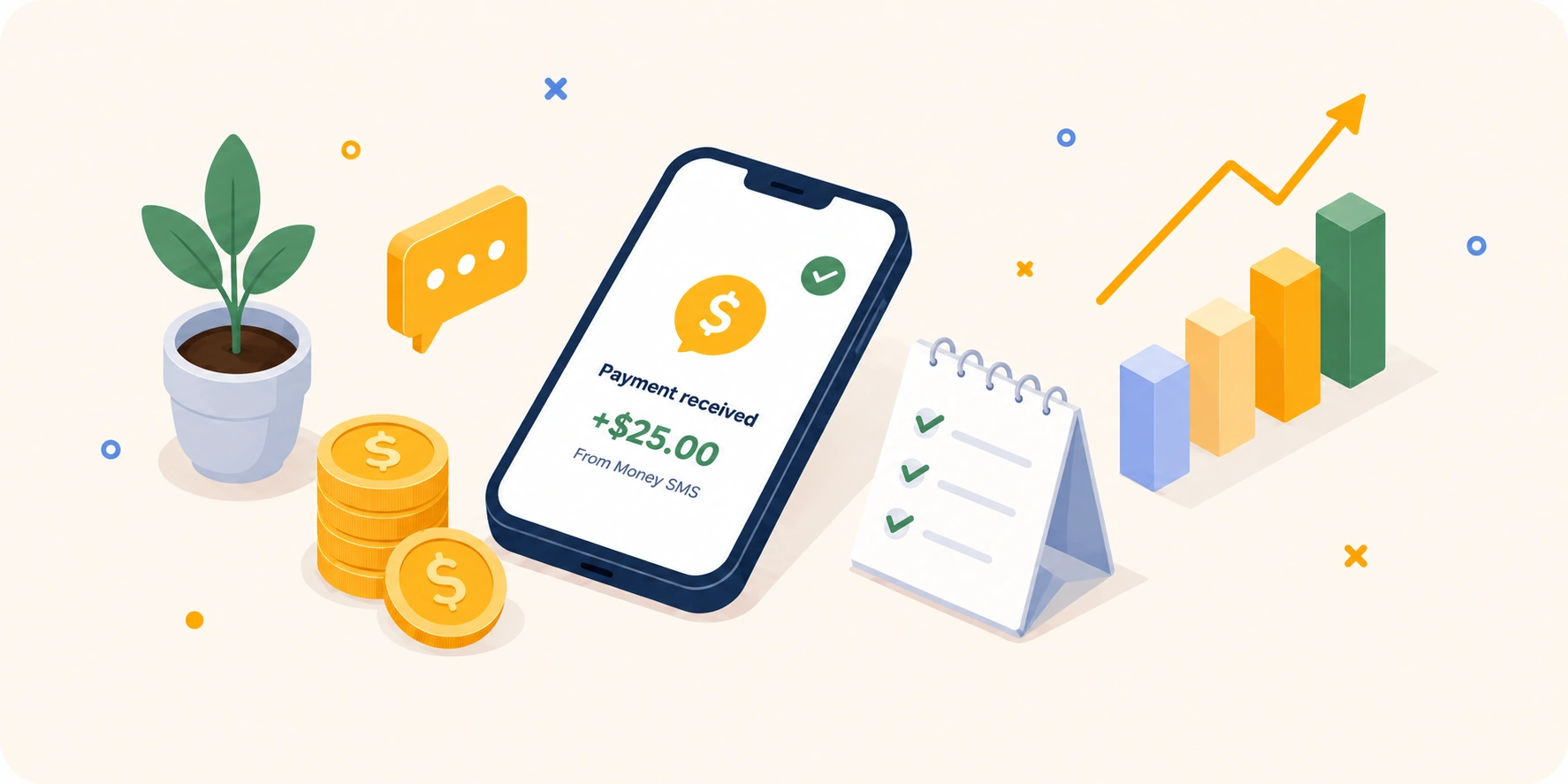
SMS testing apps like Money SMS and McMoney turn your phone into one of those test points. The app receives automated test texts in the background and pays you a small amount for each one. Your own messages are ignored.
Setup takes about five minutes: install the app, allow it to receive the test texts, and leave it running. After that it earns on its own, even when your screen is off.
- Truly passive: after a 5-minute setup, it runs on its own with nothing to do
- Free to start and no skill needed, so anyone with a phone can use it
- Pays real cash, usually straight to PayPal, with a low minimum to cash out
- Good apps read only test codes, so your personal texts are never opened or stored
- Pay is modest, usually a few euros a month per phone
- Earnings rise and fall with how many tests networks run in your country
Money SMS: truly passive income
Get paid real cash for the test texts your phone receives in the background. Free to start, trusted for 10+ years, €1M+ paid out, €2 PayPal minimum.
2. Cashback apps
Cashback apps pay you back a slice of what you spend at shops you already use. You either link a bank card or open the retailer through the app first, then shop as normal.
The rate is usually 1%–10%, and special promotions can go higher. Apps like TopCashback, Rakuten, or Swagbucks pay out to PayPal or your bank once you reach a small minimum.
The trick is to use it only for things you would have bought anyway. Chasing a deal you don't need cancels out the saving.
- Real money back on shopping you were going to do regardless
- Typical rates of 1%–10%, with bigger boosts on featured offers
- Paid in cash to PayPal or your bank, not just store credit
- Only worth it if it doesn't tempt you into spending more
- Earnings follow your spending, not your spare time, so there's a ceiling
3. Spare-change investing apps
Round-up apps connect to your card and round every payment up to the next euro, then invest the difference. Buy a €2.40 coffee and €0.60 is set aside automatically.
Apps like Acorns, Moneybox, or Revolut put that spare change into a low-cost fund. You can add a fixed weekly top-up of, say, €5–€10 if you want it to grow faster.
This is a savings habit more than an earner. Remember it is your own money being invested, and its value can rise or fall.
- Builds a pot in the background from money you'd barely notice
- Makes investing simple for complete beginners
- It isn't free income: you're moving your own cash, not earning new money
- Investments can go down as well as up, so it carries real risk
4. Internet-sharing apps
These apps pay you to share a slice of your unused internet. Companies use that bandwidth to check how their websites, ads, and prices look to real people in your country.
Apps like Honeygain or Peer2Profit run quietly in the background and pay by the gigabyte, often around $1 for every 10 GB you share. The more spare data you have, the more you make.
Because other traffic passes through your line, run only trusted apps and read exactly what they do first.
- Completely hands-off once installed, with nothing to manage
- Free to set up and runs alongside your normal browsing
- Very low pay, often just a euro or two a month
- Strangers' traffic shares your connection, which is a privacy trade-off
Use only large, well-known apps
You're letting other people's traffic run through your connection, which can carry risks. Stick to large, well-reviewed apps, read exactly what they do with your line, and never run one on a work or shared network.
Low-effort ways (a few minutes a day)
These pay more than passive apps, but you have to show up for a few minutes. They're ideal for a bus ride, a queue, or a coffee break.
5. Paid surveys
Survey apps pay you to answer questions about products, brands, and ads. Companies use the answers for market research, and you get a small reward for each completed survey.
Most take 5–15 minutes and pay €0.50–€3 in cash or gift cards. Apps like Swagbucks, YouGov, or Attapoll send new ones throughout the day.
Sign up to a few apps so you always have surveys waiting, and answer honestly: rushing or contradicting yourself can get you screened out before the end.
- No skill or experience needed to start
- Pays in cash or popular gift cards
- Easy to slot into a queue or a coffee break
- Low pay per survey, usually €0.50–€3
- The hourly rate is poor once you add up the time
- You're sometimes screened out partway through and earn nothing
6. Get-paid-to (GPT) reward apps
Get-paid-to (GPT) apps reward you for small online tasks: watching short videos, testing a new app for a few minutes, signing up to a free trial, or answering a quick poll.
You earn points as you go and swap them for PayPal cash or gift cards. Apps like Swagbucks and Freecash bundle lots of these tasks in one place.
The best-paying offers usually involve trying a paid product, so stick to the free ones unless you actually want what's on offer.
- Very easy, with no skill required
- Lots of different small tasks to pick from
- Cashes out to PayPal or gift cards
- Rewards build up slowly from lots of tiny tasks
- Higher-paying offers often want a sign-up or a trial
7. Receipt-scanning apps
Receipt apps pay you just for photographing your shopping receipts. The app reads what you bought and credits your account, no matter where you shopped.
Each receipt is worth only a few cents, but apps like Shopmium or Receipt Hog also add bonus offers and prize draws. The credit builds up over weeks of normal shopping.
It pairs well with cashback: scan the same receipt and one shopping trip can pay you twice.
- Takes seconds: just snap a photo after you shop
- Stacks on top of cashback, so one trip can earn twice
- About as close to free money as it gets
- Only a few cents per receipt
- You have to scan regularly for it to add up to much
8. Test websites and apps
Companies pay real people to try their websites and apps and say out loud what feels slow or confusing. It's some of the best-paid casual work you can do from a phone.
You record your screen and voice while completing simple tasks, usually 10–20 minutes each, and earn around €4–€8 per test. Platforms like UserTesting and Userlytics match you to tests that fit your profile.
Tests come and go, so turn on notifications and grab them quickly. Payment usually lands a week or two after each one.
- Strong pay for the time: roughly €4–€8 per 15–20 minute test
- The best pay-per-minute of any low-effort option here
- No special skill, just clear spoken feedback
- Tests aren't always available, so income is uneven
- You're usually paid a week or two after each test, not instantly
9. Microtask apps
Microtask platforms split big projects into thousands of tiny jobs: labelling images, sorting data, checking a business address, or rating search results.
You pick tasks from a list and do as many as you like. Sites like Amazon Mechanical Turk, Clickworker, and Appen are the best known.
Each task pays a few cents, so it suits dead time rather than serious income. Focus on the higher-paying batches to make it worthwhile.
- Flexible, no-skill work you can start and stop anytime
- Plenty of tasks, so you can do a big batch in one sitting
- Only a few cents per task
- Even at speed it rarely beats a few euros an hour
10. Reward games
Some apps pay you to play simple mobile games and reach certain levels. Platforms like Mistplay reward time spent on featured games with points you swap for gift cards.
Be honest with yourself here. The pay is the lowest on this list, often just cents an hour, and you only earn while you actively play.
Treat any reward as a small bonus on games you'd play anyway, not as real income.
- Earns a little from games you might play in your downtime
- No skill needed and free to start
- The lowest pay here, often only cents an hour
- Many apps dangle big rewards that almost no one reaches
Never pay to 'unlock' earnings
Some games promise big payouts almost no one reaches, then ask you to pay to 'unlock' them. A genuine earning app never charges you to start. If it does, walk away.
Active ways (more time or a skill, but higher pay)
These pay the most but need real time or a skill. If passive feels too slow, the bigger money is here, and most of it still runs from your phone.
11. Sell things you already own
The fastest money on this list is usually sitting in your cupboards. Your phone camera plus a selling app turns clothes, gadgets, and furniture you no longer use into cash.
Photograph the item, write a short honest description, set a price, and post it. Apps like Vinted, eBay, and Facebook Marketplace reach buyers in minutes.
Price it to sell by checking what similar items go for, and keep packaging simple to protect your profit.
- Often the quickest cash you can raise from your phone
- A good clear-out can bring in a few hundred euros
- Needs nothing but your phone and things you already own
- Each item pays once, so it's not repeatable income
- It dries up as soon as you run out of clutter to sell
12. Rent out your space and things
If selling feels too final, you can rent things out instead and keep them. Apps now exist for almost anything you rarely use.
You can list a parking space, a spare room, a storage corner, or gear like a drill or camera. A city parking spot alone can bring €30–€100+ a month through apps like JustPark, Neighbor, or Fat Llama.
After the first booking it's mostly hands-off, but check the rules before you list anything valuable.
- Earns repeat income from things you already own
- A city parking space can pay €30–€100+ every month
- Mostly passive once the first booking is set up
- Items you lend out can be damaged or returned late
- You have to handle bookings, messages, and people
Check insurance and local rules first
Renting out a room, parking space, or gear can break a tenancy agreement, local rules, or your insurance. Confirm what's allowed and that you're covered before you list anything valuable, and start with low-value items.
13. Sell a skill as a freelancer
If you have a skill like writing, design, translation, or editing, freelance apps connect you with paying clients worldwide. This is where phone earnings start to look like real money.
Sites like Fiverr and Upwork let you list what you offer, take small jobs, and message clients straight from your phone. Jobs range from €5 quick tasks to hundreds for bigger projects.
It's slow at first while you collect reviews, so start with small, fast jobs to build a rating buyers trust.
- Pays far more than passive apps: €5 to hundreds per job
- Builds a real skill and a review history that's yours to keep
- You need an actual skill to offer
- It's active work with client deadlines
- Earnings are slow until your reviews build up
14. Sell your photos
If you take good photos, stock libraries will sell them to businesses, bloggers, and designers who need images. You upload once and the same photo can sell again and again.
Apps like Shutterstock, Adobe Stock, and Foap let you upload straight from your phone. Each download pays from a few cents to a few euros.
It rewards a growing library and patience: a handful of photos earns little, but hundreds can quietly add up.
- One good photo can sell many times over
- Turns a hobby you already enjoy into income
- Each sale is small, from a few cents to a few euros
- It builds slowly, so it pays off only with patience
15. Sell digital products
Digital products are things you make once and sell over and over, with nothing to post. Think budget spreadsheets, printable planners, wallpaper packs, or a short how-to guide.
Shops like Etsy and Gumroad handle the selling and delivery for you. Because there's no stock and no shipping, almost every sale is profit.
The hard part is the first sale. Make something people genuinely search for, not just something you'd like to sell.
- Make it once and sell it an unlimited number of times
- Almost pure profit, with nothing to manufacture or ship
- The closest 'active' idea here to truly passive income
- Getting that first sale is the hardest part
- It only works if you pick something people actually want
16. Tutor online
If you know a school subject or speak a second language well, you can tutor students over video from your phone. Demand for languages and exam help stays high all year.
Apps like Preply, Cambly, and italki match you with students, handle payment, and let you set your own hours. Rates commonly run €10–€30+ an hour.
You're teaching live, so you need to show up on time, but the pay per hour is among the best here.
- Strong pay: commonly €10–€30+ an hour
- Rewards knowledge you already have
- It's live work tied to a booked schedule
- You need a subject or language you can teach confidently
17. Transcribe audio
Transcription means turning recorded speech, like interviews, meetings, or videos, into clean written text. Plenty of businesses and creators pay for it.
Sites like Rev, GoTranscript, and TranscribeMe send you audio files and pay per finished minute, usually €0.30–€1. Faster, accurate typists earn the most.
Expect a short test before you start, and skip files with heavy background noise until you're quick.
- No formal qualifications needed to begin
- Fast, accurate typists can earn noticeably more
- Modest pay of around €0.30–€1 per audio minute
- Tricky files with accents or poor sound slow you right down
18. Make short videos
Short-video platforms can pay creators, and the ceiling is higher than anything else on this list. The catch is that very few people reach it.
On apps like TikTok, YouTube Shorts, and Instagram Reels you can earn through view-based creator funds, brand deals, tips from fans, and selling your own products.
It takes consistent posting over months to build an audience, so treat it as a long-term project, not quick cash.
- By far the highest earning ceiling here
- Several income streams at once: funds, brand deals, and tips
- The longest odds: most creators earn very little
- Needs consistent effort over months before it pays
How to make money from your phone without investment
You don't need money to start. The free methods above all cost nothing to begin: SMS testing apps, surveys, GPT apps and microtasks, website and app testing, receipt scanning and cashback, and selling things you already own. The only thing some of them use is a little of your time.
One warning: be wary of any app or 'course' that asks you to pay up front. Real earning apps never charge you to join.
How to spot a legit earning app (and avoid scams)
The biggest risk isn't losing money up front, it's wasting hours on apps that never pay out. Before you trust one, run these four checks:
- Who runs it: look for a real company with a name, address, and track record. A registered business in your region, a real privacy policy, and a few years of history beat an anonymous app that appeared last month.
- How it pays: real cash to PayPal or a bank is best. Be cautious of apps that only pay in points, gift cards, or their own 'coins' you can never quite convert to money.
- The payout minimum: a low minimum lets you cash out a small amount first to prove it really pays. Sky-high minimums (you need €50+ before your first withdrawal) are a classic trick to keep you working for a payout that never comes.
- Real reviews: search for recent reviews from real users in your country, and look specifically for comments about getting paid. Ignore the star rating alone, since it's easy to flood an app with fake five-star reviews.
And whatever the app promises, walk away the moment you see any of these red flags:
- It asks you to pay to join or to 'unlock' your earnings. A genuine earning app never charges you. Any upfront fee, deposit, or paid 'course' is the clearest sign of a scam.
- It promises big, fast, guaranteed money. Claims like '€100 a day from your phone' are bait. Real earnings from a phone are modest, and no honest app guarantees a figure.
- It wants sensitive details it has no reason to need: your bank login, full card number, passwords, or ID photos before you've earned anything. Hand those over and you risk fraud, not income.
- There's no way to reach a real human. No support email, no company behind it, and a flood of reviews all complaining they were never paid. If people can't get their money out, neither will you.
No single check proves an app is safe on its own, but one that passes all four and trips none of the red flags is almost certainly legitimate. Run these checks before you install, not after you've spent hours earning, and you'll filter out the vast majority of scams.
How much can you really make from your phone?
Be realistic: it won't replace a salary, and any app that promises it will is one to avoid. Rough monthly ranges:
- Passive apps: a few euros a month each
- Surveys, GPT, and testing: €10–€50 a month with regular minutes
- Freelancing, tutoring, digital products: up to hundreds a month, but it's real work
- Don't rely on a single app. Stack a few across the three groups, because small amounts from several sources add up to far more than any one method alone.
- Run a passive earner like SMS testing in the background while you fill spare minutes with surveys, GPT tasks, or website tests for extra cash.
- Sell or rent the things you no longer use to turn a one-off clear-out into a quick cash boost on top.
Frequently asked questions
Can you really make money from your phone for free?
Yes. Many apps are free to download and use, so you can make money from your phone for free without spending anything. The amounts are usually small, around a few euros a month from passive apps, but it costs nothing to start, and you should never have to pay to join a genuine earning app.
What is the easiest way to make money with my phone without investment?
Passive apps are easiest, since they run in the background after a one-time setup. SMS testing apps like Money SMS are a good example: free to start, no skill needed, no investment. For a little more, website-testing and survey apps pay better per minute but need you to show up.
Are money-making phone apps safe?
The good ones are. Stick to apps run by real companies that pay in real cash, have a low payout minimum, and show reviews from real users. Avoid apps that promise large, fast earnings or ask you to pay before you can start. Those are the clearest signs of a scam.
How fast can you get paid?
It depends on the app and its payout minimum. Some pay within a couple of days once you reach the minimum; others, like website testing, pay a week or two after each task. Cashing out a small amount first is the best way to confirm an app pays before you spend more time on it.