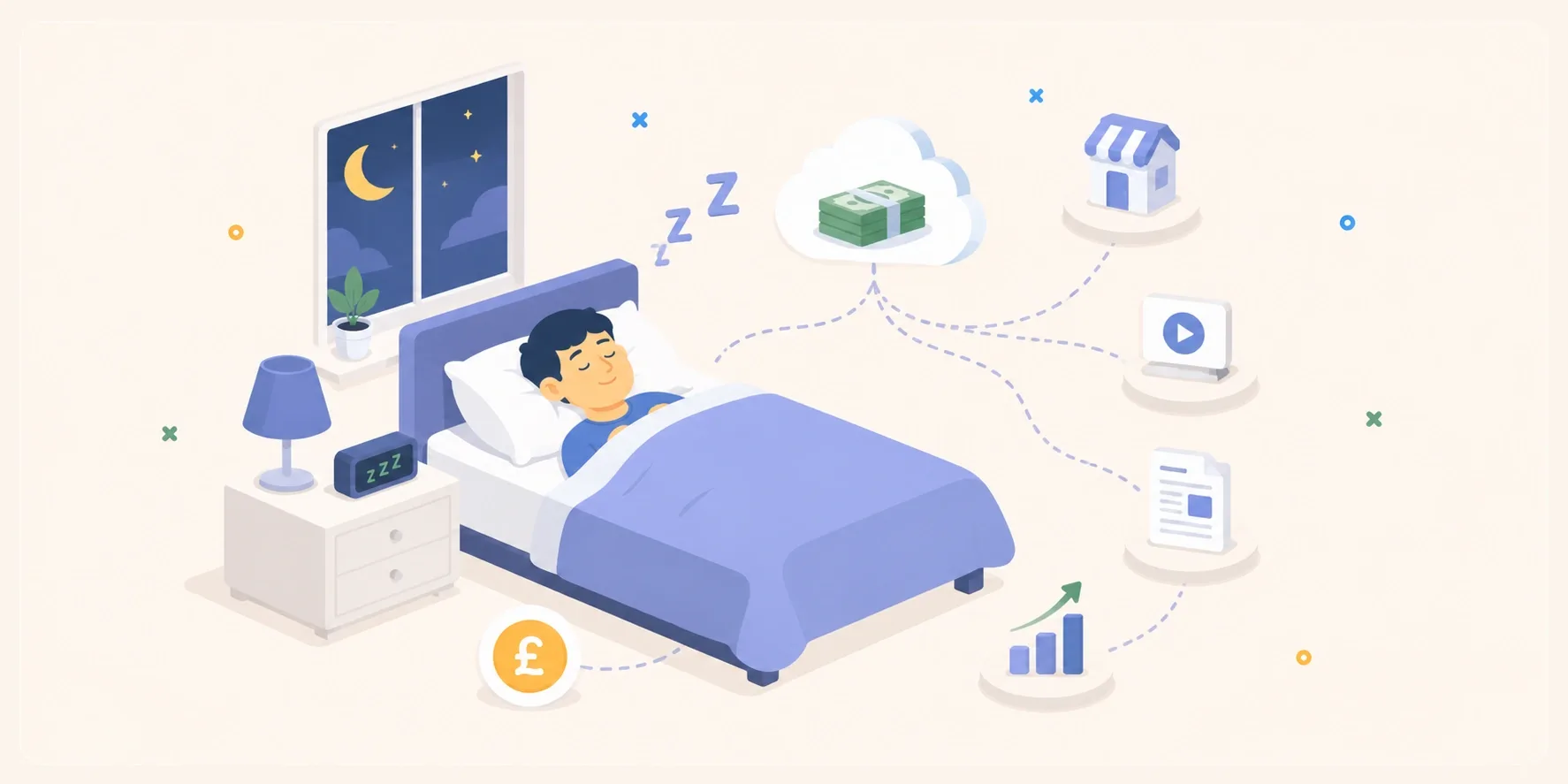

Passive income in the UK is real. People here earn it every month from savings, shares, property, and apps that run on their own.
About 9.3 million UK adults, roughly one in six, hold a stocks and shares ISA, according to the FCA Financial Lives survey. Typical UK dividend yields run 3% to 5%, so a £10,000 holding might pay £300 to £500 a year before tax.
So the hard part is not wanting it. It is knowing which options actually pay, and which just waste your money or your time.
Most guides oversell the dream and point you to options that need big money or months of work. This blog post sorts every option by what it takes to start, what it really pays, how UK tax treats it, and which streams you can switch on this week.
What is passive income in the UK?
It is money you earn with little or no daily work once it is set up. It usually comes from interest on savings, dividends from shares, rent from property, or apps that run in the background on your phone. What is specific to the UK is the tax: HMRC treats most of it as taxable income, though tax-free allowances and an ISA can shelter a large part of it.
The truth few people admit is this: income that is truly hands-off, from day one, with no money down, is rare. Almost every passive income stream needs one of two things first.
Either you put money in, like savings or shares, and the returns are passive after that. Or you put work in upfront, like writing a book or building a website, and the earnings come later.
Three best passive incomes in the UK
Once you sort passive income this way, the whole topic gets clearer. Every UK passive income idea, and every investment, falls into one of three types.
Knowing which type you are looking at tells you what it will ask of you before it pays.
Type A: easy passive income in the UK (no money, no skill)
These earn in the background once they are switched on. You do not need savings, and you do not need a skill.
The trade is simple: the pay is small, but the effort is close to zero. Think cashback on spending you already do, bank bonuses, and apps that run quietly on your phone.
Type B: build-once passive income streams in the UK (needs upfront work)
These are passive only after you do the work. You write the ebook, record the course, or build the channel first.
Then it can sell or earn for years with light upkeep. The pay can be good, but it is not quick, and many projects earn little until they find an audience.
Type C: passive income investments in the UK (needs money to start)
These turn money you already have into more money. Savings interest, dividends, funds, bonds, and property all sit here.
They are the most genuinely passive once set up, but they need capital first, and your money is at risk in most of them. We cover these in the investments section below.
The passive income ideas in the UK below are grouped into these three types. Start with the ones that match what you have: time, money, or a skill. For each, you will see what it pays and how much effort it really takes.
Type A: easy passive income in the UK (no money, no skill)

This is the easiest place to start, and it shows how to get passive income in the UK with no money and no skill. None of these need savings, so they are where to begin if you want to earn something with very little effort.
Cashback on spending you already do
Cashback apps pay you back a slice of what you spend, on shopping you would do anyway. Sites like TopCashback, Quidco, and Airtime Rewards pay a percentage when you shop through their links, and some banks pay cashback on everyday card spending, such as Chase on debit card purchases.
It is not income from nothing, but once it is set up it runs in the background and the money adds up over a year.
Bank switching and regular-saver bonuses
UK banks pay cash bonuses to win your custom. Switch your current account using the Current Account Switch Service and a bank may pay you £100 to £200 for moving across.
Many banks also offer regular-saver accounts with high interest on small monthly deposits. These are one-off or short-term wins rather than a steady stream, but they are close to free money for an hour of admin.
Background and data sharing apps
A handful of apps pay you to let your phone work in the background, with no tasks to complete. Honeygain and Pawns.app pay you to share a small slice of your spare internet data, which companies use for market research and price checks.
SMS testing apps do the same with text messages. The Money SMS app, on Android, is one example.
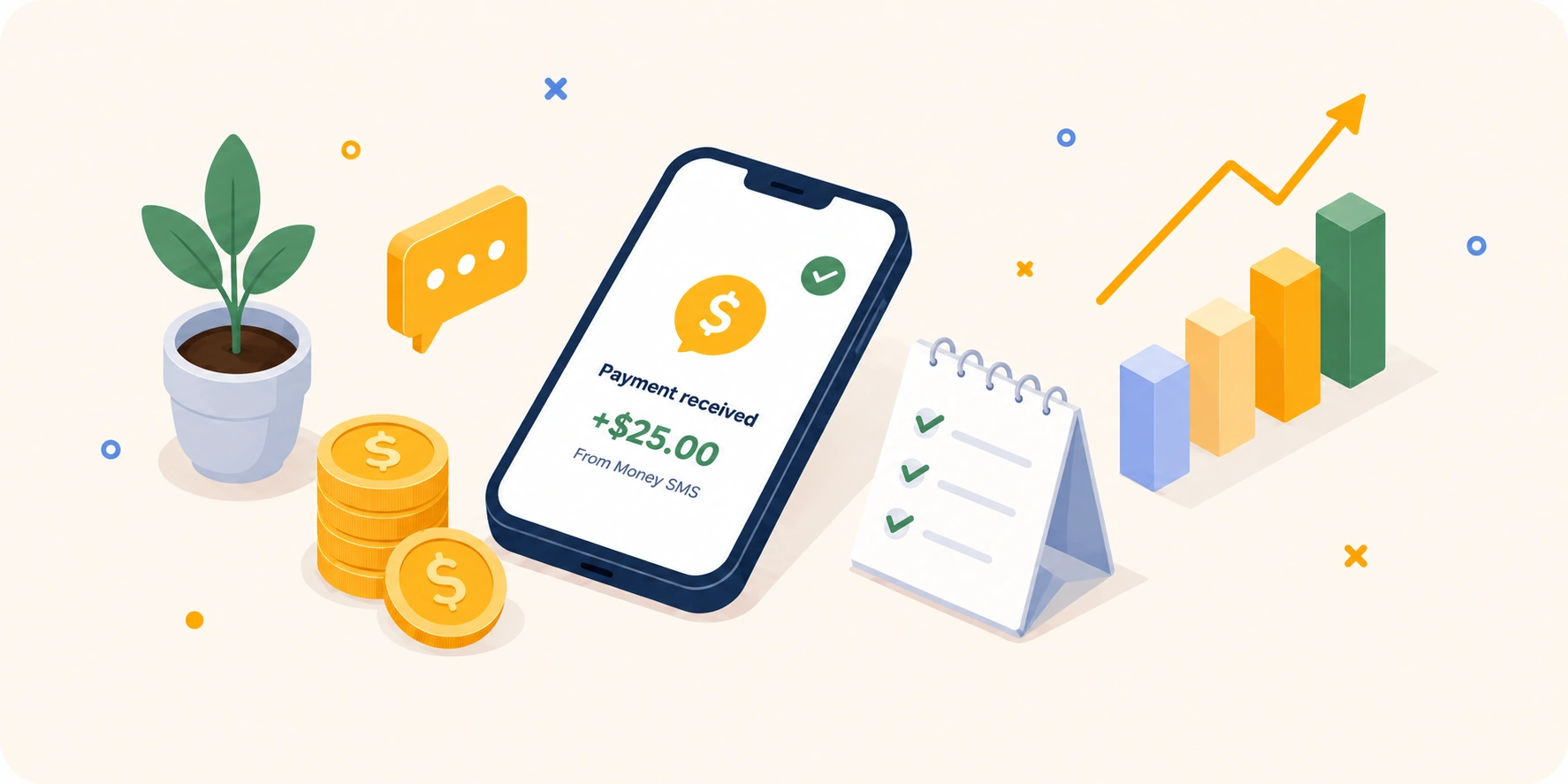
It pays you for the test messages your phone receives in the background, which a regulated EU telecom company uses to check that networks work. You install it, leave it running, and it keeps working on its own. It is a simple way to earn money through SMS without investment.
None of these pay much, a few pounds a month is normal, but the effort after setup is genuinely zero. They are some of the only options that are passive from day one, with no money down.
Type B: build-once passive income streams in the UK

These take real work upfront, then can pay for years. If you have a skill or a subject you know well, this is how to create passive income in the UK that grows over time.
Be realistic about the time first, as most of these earn little until they find an audience.
Digital products
Templates, planners, spreadsheets, presets, and printables sell over and over with no stock to hold. You make the product once and list it on a shop like Etsy or a UK platform like Payhip.
The work is all upfront, and the best sellers solve a clear, small problem for a specific group of people.
Ebooks
If you can write about a subject in depth, an ebook can sell for years. Amazon Kindle Direct Publishing lets you publish for free and earn a royalty on each sale.
One book rarely earns much, but a small shelf of titles on a topic readers search for can bring in a steady trickle.
Online courses
Teach a skill once, on video, and sell it again and again. Platforms like Udemy and Teachable host the course and handle payments.
Recording a good course takes weeks, but a course on a subject people pay to learn can earn long after you finish it.
Easy passive income in the UK
Money SMS pays you for test SMS received in the background, run by a regulated EU telecom company. Free to start, €2 minimum to cash out.
YouTube or a podcast
A back catalogue of videos or episodes can earn from ads, sponsors, and affiliate links for years. This is a long game.
Most channels earn nothing for months, and many never take off. But the ones that find an audience keep earning from old content while you make new content, which is what makes it passive over time.
Print-on-demand
Put your designs on t-shirts, mugs, and posters without holding any stock. A service like Printify, or a UK company like Prodigi, prints and ships each item only when someone buys it, and you keep the margin.
The design work is upfront, then sales can come in with no further effort, though good designs and a clear niche matter most.
Stock photos and footage
If you take good photos or video, sites like Shutterstock and Adobe Stock pay you a small fee each time someone licenses your work. One photo earns pennies, but a large library, built up over time, can pay a small amount every month with no extra work once uploaded.
Affiliate websites and blogs
Build a website or blog around a topic, then earn a commission when readers buy through your links. It takes months of writing before search traffic and earnings build, so this is firmly a long game.
Once a page ranks well, though, it can earn for years with light updates.
Type C: best passive income investments in the UK

If you want to know how to generate passive income in the UK from money you already have, this is where it gets close to truly hands-off. You put money in, and the returns arrive with little day-to-day work.
A quick word on risk first. Cash savings are the safest but pay the least. Shares and funds can grow much more over time but can fall in value. Property ties up a lot of money and is hard to sell quickly. Never invest money you cannot afford to lose, and spread your money across more than one thing.
Stocks and shares ISA
A stocks and shares ISA is a wrapper, not an investment itself. You hold funds or shares inside it, and all growth, dividends, and interest are free of UK tax.
You can pay in up to £20,000 a year across all your ISAs. For most people building passive income, this is the first account to fill, because it keeps the taxman out of your returns.
Index funds
An index fund spreads your money across hundreds or thousands of companies at once, tracking a whole market. It is the closest thing to set and forget investing.
You drip-feed money in, reinvest the dividends, and leave it for years. Fees are low and you do not pick individual shares, which is why many passive investors start here.
Dividend stocks
Some companies pay out part of their profit to shareholders as dividends, usually a few times a year. Build a spread of solid dividend payers and you get regular cash without selling anything.
Dividends are not guaranteed and can be cut, and the share price still moves, so this suits people happy to hold for the long term.
Bonds and gilts
When you buy a bond you lend money to a company or government and earn interest in return. UK government bonds are called gilts and are seen as low risk, and you can also buy government-backed savings from NS&I.
Bonds usually pay less than shares but are steadier, which is why many people hold some for balance. You can buy them through funds for simplicity.
REITs (property funds)
A real estate investment trust, or REIT, lets you earn from property without buying a building. You buy shares in a fund that owns offices, shops, or homes, and it pays out most of its rental income to you.
It is far easier than being a landlord, though the share price can still fall and rents can drop.
Peer-to-peer lending
Peer-to-peer platforms let you lend money to people or businesses and earn interest. The advertised returns can look high, but so is the risk: borrowers can default, and your money is not protected by the FSCS the way savings are.
Treat this as a higher-risk slice of a wider plan, not a safe core.
Buy-to-let property
Owning a property and renting it out can produce a real monthly income. It is the least passive option here, though.
You need a large deposit, and you deal with tenants, repairs, letting fees, and tax. A letting agent removes most of the day-to-day work for a fee.
The numbers only work if the rent covers the mortgage, costs, and tax with room to spare.
Rent a room
If you own or rent a home with a spare room, letting it out is one of the simplest property incomes going. Under the UK Rent a Room Scheme you can earn up to £7,500 a year tax-free from a lodger.
It is not fully passive, as you share your home, but the income is steady and the tax break is generous.
Ways to make passive income in the UK
The right option depends on what you have to start with. Here are sensible choices for four common situations.
- No money to start: begin with Type A. Set up cashback on your normal spending, grab a bank-switching bonus, and run a hands-off app or two in the background. None of it needs savings, and you can start this week.
- Some savings: open a stocks and shares ISA and drip-feed money into a low-cost index fund each month. It is simple, spreads your risk, and the growth is tax-free inside the ISA.
- A lump sum: spread it rather than betting on one thing. A mix of index funds, some bonds or gilts for balance, and perhaps a REIT for property exposure gives you income and growth without a single point of failure.
- No spare time: lean on the most hands-off options. Index funds inside an ISA, dividend funds, and background apps all run with almost no daily input once set up.
Is passive income taxable in the UK?
Yes, passive income is usually taxable in the UK, but several allowances let you earn a fair amount before you owe anything. Knowing them can save you both tax and paperwork.
Here are the main ones for the current tax year.
- Trading allowance (£1,000): your first £1,000 of income from things like selling products, apps, or side work is tax-free each year. Earn under this and you usually do not need to tell HMRC.
- Property allowance (£1,000): a separate £1,000 of property income each year is tax-free, for example from renting out a driveway or storage.
- Rent a Room Scheme (£7,500): you can earn up to £7,500 a year tax-free from letting a furnished room in your own home.
- Dividend allowance (£500): the first £500 of dividends each year is tax-free. Above that, the rate depends on your income tax band.
- Personal savings allowance: basic-rate taxpayers can earn £1,000 of savings interest tax-free, higher-rate taxpayers £500, and additional-rate taxpayers nothing.
- The ISA wrapper: anything you hold inside an ISA is free of UK tax on interest, dividends, and growth, up to the £20,000 a year you can pay in. This is the simplest way to keep investment income tax-free.
You usually need to file a self-assessment tax return if your untaxed income goes over £1,000 in a year, or if your taxable dividends or savings interest pass the allowances above.
Register with HMRC, keep simple records of what you earn, and file by the deadline. If your earnings stay under the allowances, you often have nothing to report at all.
General information, not advice
This is general information about UK tax, not financial or tax advice. Allowances and rules change, and your own situation may differ. Check the current rules on GOV.UK or speak to a qualified adviser before acting.
How to earn passive income in the UK step by step
The simple answer to how to make passive income in the UK is that you do not need to do everything at once. Run one easy stream today while you build a slower one in the background.
It works without a lump sum or a long wait. Here is a simple plan.
- 1Pick your type. Decide what you have most of right now: time, money, or a skill. That points you straight at Type A, Type C, or Type B.
- 2Switch on one hands-off stream today. Set up cashback, line up a bank-switch bonus, or install a background app and leave it running. This gives you a small win while the slower streams build.
- 3Start building one slower stream. Open a stocks and shares ISA and set up a monthly payment into an index fund, or begin the first digital product, ebook, or course you can sell again and again.
- 4Let it run, then add more. Give it a few months before you judge it. Once your first streams are a habit, add another. Stacking a few small streams beats chasing one big one.
- There are three types. Passive income streams in the UK are either hands-off (almost no effort, but little pay), build-once (more pay, but upfront work), or investment-based (best pay, but they need capital first).
- Truly passive from day one is rare. Making passive income in the UK almost always means money or effort first, so start the slow streams early and run an easy one alongside them.
- Tax allowances are generous. Use your ISA and the £1,000 trading allowance, and many small streams stay tax-free with no paperwork.
Frequently asked questions
How long before passive income actually starts paying?
It depends on the type. Hands-off options like cashback and background apps pay within the first week or month. Investments start paying interest or dividends soon after you put money in. Build-once options like courses, ebooks, and channels are the slow ones, often taking several months, sometimes a year or more, before they earn anything worth counting.
How much do you need to live off passive income in the UK?
Replacing a full salary takes a large pot and is a long-term goal for most people. The practical target is much smaller: cover one bill, or top up your wages. As a rough guide for the 4% drawdown rule, a £20,000 pot gives about £800 a year and a £50,000 pot about £2,000. Most people build toward that slowly rather than trying to replace a full income at once.
Do I need to register as self-employed to earn passive income?
Not always. If your untaxed extra income stays under the £1,000 trading allowance in a tax year, you usually do not need to register or report it. Once you go over that, you typically need to register with HMRC and file a self-assessment return. Investment income inside an ISA stays tax-free and does not need reporting.
Is passive income really passive?
Not completely. Almost every stream needs either money or effort to set up first, and most need some upkeep after that. Background apps and index funds come closest to truly hands-off, and they are the streams that can make money while you sleep. The honest way to see passive income is as income that needs far less ongoing work than a job, not as money for nothing.